things merchandise usually for by product for market, of for demonstrative special kind, demonstrative kind by demonstrative the need.

Original article and pictures take www.sportsandnutrition.net site
things merchandise usually for by product for market, of for demonstrative special kind, demonstrative kind by demonstrative the need.
Have you let yourself go a bit in recent months or years? Do you have a special event coming up soon? Wouldn’t you like to look like your old self for that special day? Losing weight quickly is something many of us strive to do from time to time, but it can be difficult. Some of you may even believe that quick weight loss is impossible to achieve short of starving yourself. However, this is simply not true. The following article will teach you how you can safely lose weight quickly and keep that weight off. Read on and learn some great tips for losing weight fast!
The first step you are going to take is to substitute all of your beverages with water. So goodbye to sodas and juices that are full of unnecessary sugar. You’d be surprised to learn how many extra calories you can consume from sodas alone, and these calories have no nutritional benefits other than expanding your waist line. Some of you may find it difficult to drink only water all day every day, but give it time, and you’ll soon see that your cravings for sugary drinks will go away, and you will enjoy much more energy throughout the day when you drink enough water. Strive to drink a minimum of 8 glasses of water each day (more if you are working out). Carrying around a water bottle will make it much easier for you to get your daily requirements of water as it will always be around so you never forget to drink up.
If you are serious about losing weight in a hurry then you are going to have to find some way to burn calories. Now running 5 miles a day would do the job, but lets be honest, who on earth wants to do that? Rather, it is important that you find an activity that you enjoy doing so that you can stay motivated during your weight loss journey. Try playing basketball or any other sport that you enjoy, and you will soon see the pounds start to melt away.
When it comes to losing weight quickly, you must burn more calories than you consume. For this reason, it is of the utmost importance that you keep your portions small when you do it. This doesn’t mean you have to starve yourself, but you should be making a conscious habit of eating only what you need to sustain your energy throughout the day. Try breaking your meals into 5 small meals instead of 3 larger ones so that you feel fuller throughout the entire day.
We’ve just gone over a few of the many ways you can help yourself lose weight quickly. You should take the time and do some research on your own to find even more helpful ways to lose weight, but if you implement the tips mentioned in this article, you are sure to drop those pounds in not time and enjoy the body you once had. Good luck!


Building muscle happens when you find the balance between strategic strength training and an eating plan (that should include proper protein and healthy carbohydrates while limiting refined sugars, processed food, and artificial ingredients). However, that doesn’t mean you have to settle for the same salmon and kale for lunch and a dry chicken breast for dinner! Here's a compilation of 25 muscle building foods that can add variety to your diet and help you sculpt those muscles into flex-worthy shape.
1. Oysters: Another seafood pick that offers the mineral zinc, oysters are rich in protein and help replenish muscles broken down from training.
2. Vinegar: Not only a nice pairing with your olive oil for salads, but when paired with carbohydrates, it acts as an agent to cause those carbs to be stored as muscle glycogen, rather than stored fat.
3. Green tea: Green tea is a wonderful antioxidant and diuretic that has also been linked to fat loss and improved blood circulation. A perfect substitute for coffee when in muscle mode! If you haven't tried our Detox Green Tea you are seriously missing out. Give it a go already!
4. Eggs: A whole egg is a perfect pick for a protein punch. And don’t get rid of the yolk! When trying to build muscle, the yolk contains beneficial nutrients worthy of consumption. We're currently salivating over these 11 incredible egg recipes.

>> VIDEO: How To Hard-Boil An Egg
5. Broccoli: Not only is broccoli low in calories and filling, it also contains a significant amount of soluble fiber, which aids in fat loss. Who doesn't love a fat loss bonus?!
6. Chocolate milk: Another option containing the slow-digesting protein, casein, chocolate milk has been touted as not only a great post-workout recovery drink, but a good source of necessary carbs.
7. Almonds: These nuts stack up high when it comes to fiber and protein in comparison to most nut options. They also contain vitamin B, a vitamin linked to energize metabolism. Try Skinny Mom's yummy Fruit and Almond Trail Mix, which is kid-tested and mommy-approved.
8. Raspberries: Raspberries contain the most fiber of all berries. A fiber-filled diet is imperative for proper digestion and muscle sculpting. The antioxidants can also help regulate metabolic rates and insulin sensitivity.

9. Avocados: Packed with monounsaturated fat, the “good” fat, avocados can help eliminate weight from the midsection while containing a host of 20 different essential nutrients.
10. Quinoa: An option over grains that is high in amino acids, which sets it apart from most carbohydrates in your diet. Team Skinny Mom is quinoa-obsessed. Try our Quinoa Mexi-Lime recipe!
11. Apples: Offering electrolytes, carbs and fiber, apples are a great post-workout snack and option for adding muscle mass to your physique.
12. Spinach: Not only known as a superfood, the calcium in spinach can help to relax muscles and prevent cramping during muscle training intervals.

13. Mussels: Just say yes to seafood, and especially these muscle-building mussels. High in protein and low in fat, mussels also contain B12, which is essential for active individuals.
14. Extra virgin olive oil: Another source of monounsaturated “good” fat, extra virgin olive oil is a great enhancement to your salads and vegetable servings when in muscle-building mode.
15. Oats: Oats are high in fiber, yet offer low sugar and carbohydrate options needed for lasting energy when muscle training. Look for whole rolled oats and avoid processed options. We love starting the day with Slow Cooker Oats topped with blueberries. NOM.

16. Turkey: Turkey weighs in as one of the leanest meat options available. Packed with protein, turkey paired with vegetables can make for a hearty and muscle-friendly meal.
17. Carrots: Not only a source of vitamins, carrots are also rich in fiber and low in calories. They make an easy grab-and-go snack raw or can be cooked as a side dish with meals.
18. Cottage cheese: Also containing casein, cottage cheese additionally contains an average of 28 grams of protein in one cup! Choosing a low-fat cottage cheese is a great option provided it has not been supplemented with extra sugar or sodium.
19. Lentils: A perfect side dish with lean meats or vegetables, lentils offer fiber, protein, and slow-digesting carbohydrates most desirable when training to strengthen muscles.
20. Beets: Packed with natural nitrates, beets stand up to improve lasting performance when it comes to vasodilatation, or widening of blood vessels, which inhibits muscle growth.

21. Black beans: Don’t save these gems for taco night. Eating black beans provides you with vitamins B, K, C, and A, which are low in saturated fats. It’s a high protein and fiber food that is low in calories. Yes, please!
22. Salmon: One of these best sources of omega-3 fatty acids, salmon cannot be left off of any list for those who want to improve their physique. Look for wild salmon over farm-raised, which can be raised on corn and grain feed. From salmon burgers to salmon sushi bowls, we've got you covered in the superfood salmon department.

23. Venison: It may not be a meat that you come across often, but when you do, take advantage! Venison is high in iron and low in saturated fat and an excellent source of protein that packs flavor and nutrition.
24. Brown rice: A staple on most body builder diets, brown rice offers complex carbohydrates which lead to lasting energy for athletes. Look for whole grain options when shopping for this staple.
25. Greek yogurt: With more than twice the protein of regular yogurt, Greek yogurt is a great source to turn to when focused on muscle enhancement. Just be careful to avoid Greek yogurt with artificial colors, added sugars, and artificial ingredients. Greek yogurt also contains casein, a slow digesting milk protein to help keep you feeling full longer.
Don't let your meals become boring — add some of these foods for a good variety and watch those muscles grow!


The BEST yoga poses for runners. Stretch your hips, hamstrings, quads, and back. Gain flexibility, and help prevent injury with this quick yoga sequence.

Unfortunately, summer here is Minneapolis is starting to come to a close. Every morning when I wake up it becomes just a bit cooler out for my morning run. Some days I even started wearing long sleeves!
Holloway Sportswear sent me a new pullover just in time, and it’s absolutely perfect for this in-between weather. It’s lightweight and not too warm. Perfect for morning runs!
One of the things I love most about the pullover are the thumbhole sleeves…am I the only sucker for anything with thumbholes?!
As I had mentioned a few posts back, with fall around the corner, it’s a time for everyone to get back into their “normal” routine. And part of my normal routine is getting to yoga classes.
With all the traveling I did this summer, I was not as consistent with my yoga practice as I would have like to have been. I normally go about 3 times per week, and I was lucky if I made it once a week…and my body can tell! My hips are tight and my low back is screaming to move more!
But, even though I wasn’t making it into class as much, I still did poses on my own to help me stretch out after my runs and at least maintain my flexibility.
I put together some of the best yoga poses to help YOU after your runs. These are the poses that saved me this summer, so I hope you enjoy!

Complete these poses after your run to help keep your muscles loose and to help prevent injury. No need to have a mat, just simply find a soft patch of grass and cool down after a long run. Hold each pose for at least 30-60 seconds.
Make sure you complete all the single sided poses on the OTHER side as well. I like to run through the entire sequence a seconds time on the other side. That way I can get a bit deeper into some of the poses.
Download your FREE printable version HERE.
What are your favorite runner stretches?


Many people are unsure where to start when it comes to exercising and have lots of questions.
It doesn't matter if you want to exercise to help you lose weight, if you need a tailored plan because you are pregnant, or if you want an exercise routine that will suit a beginner, first off before you worry about the specifics everyone needs to plan out when and where, and possibly with who, they will train.
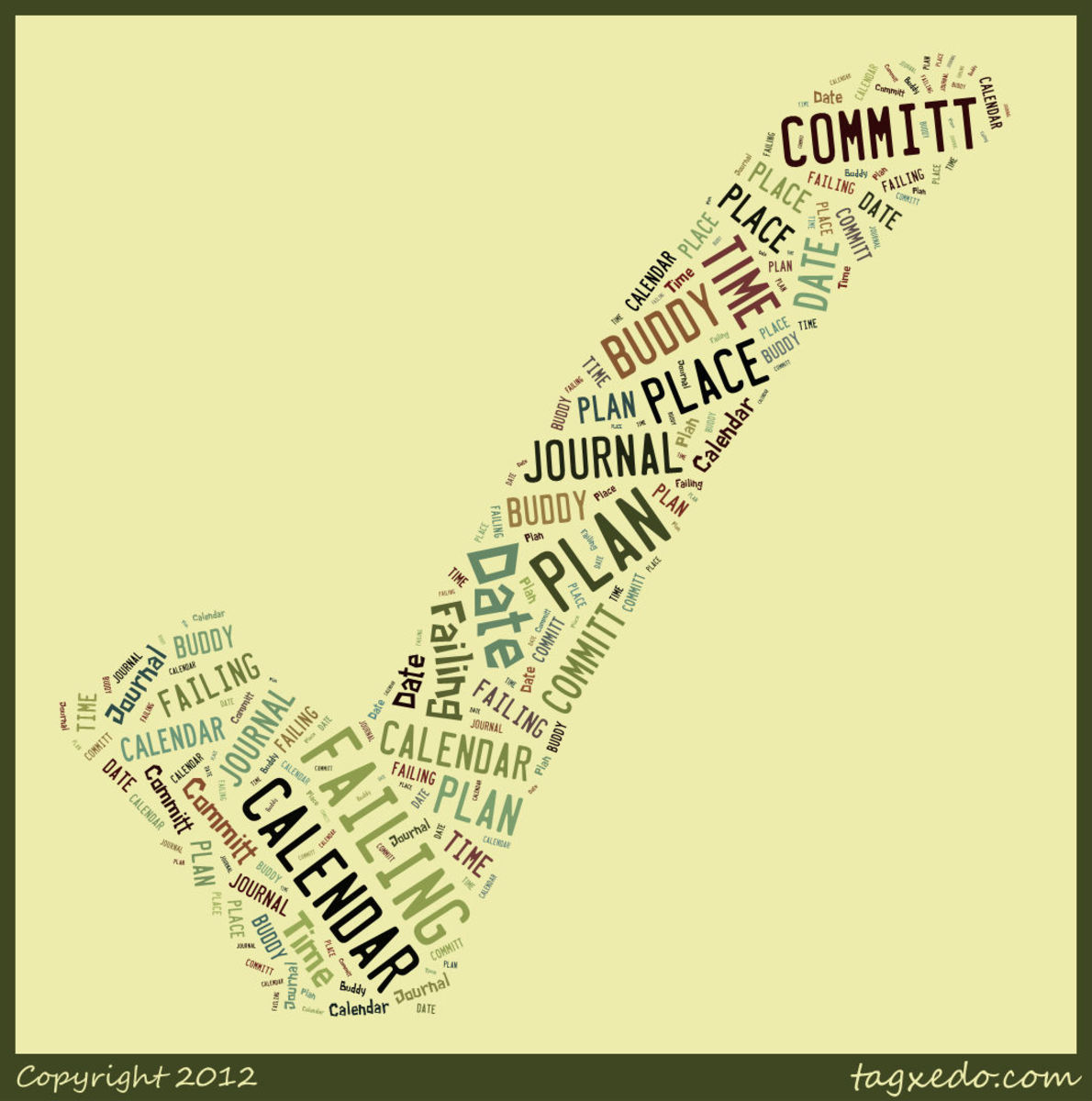
REMEMBER: FAILING TO PLAN IS PLANNING TO FAIL
Make a couple of dates with yourself every week, add them to your wall calendar, your phone or your outlook, this is an important appointment and therefore you should ensure it is prioritised and not double booked. Let everyone know that at these specific times every week you are engaged.
The workout routines provided in this hub can be completed at home, in the gym or outside. The exercises can be modified to make them easier or harder and so should suit all fitness levels.
But before you jump straight in you need to be honest about how fit you currently are. For instance, have you ever exercised on a regular basis or are you a complete beginner?
If you already have a certain level of fitness perhaps you want to consider using weights when possible during the routines, where as if you are a complete beginner just do what you can with resistance bands or your own body weight,
NOTE: IT IS MORE IMPORTANT TO COMPLETE ONE EXERCISE WITH GOOD FORM, NO ADDED WEIGHTS AT A GOOD TEMPO THAN TO BANG OUT 20 REPS AT SPEED HOLDING HEAVY WEIGHTS AND CAUSE YOURSELF AN INJURY IN THE PROCESS - LEAVE YOUR EGO BEHIND!!!
I suggest that beginners should start by completing 2 or 3 all over body workouts a week. This way you will not overload any one muscle group.
There are 2 all over body workouts detailed in the hub linked below. They should not be completed on consecutive days and you should try to alternate them as they provide different exercises for the main muscle groups; Back, Chest, Legs and Shoulders.
Each workout should take approximately 20 mins. You should warm up and cool down for 5 mins either side. Your warm up can be as simple as walking up and down a flight of stairs while circling your arms, all you need to achieve is getting the blood flowing through the muscles. While your cool down should consist of some static stretches.
So you are used to working out but want to try something a bit more challenging, why not give the overload circuit, outlined in the linked hub below, a go.
An overload circuit is different in that you overload one particular muscle group. This is opposed to exercising one muscle group directly after the other, as detailed in the beginners full body workouts.
This is a tough circuit so ensure you warm up fully beforehand, but it requires very little equipment making it possible to do in the house. You will need a floor mat (or thick blanket) and an exercise step (a stair will do for most of the exercises).
When you have been working out for a long period of time full body workouts may just not be getting you the results anymore as your body becomes accustomed to them. Splits routines could be what you are looking for, with a split routine you will work only certain muscles during each workout and then concentrate on another group the following day.
An example split routine could be back and biceps on Monday, followed by chest and triceps on Tuesday, rest day Wednesday, legs on Thursday, shoulders on Friday, rest days Saturday and Sunday.
There are some example hubs for split day routines linked below. The first one targets the glutes, which are an important muscle group, with many fitness professionals training them in isolation. Warming up beforehand with sprints or hill runs can really help to jump start your fitness routine. The second hub is a back work out, it is described as a heavy back workout but you can tailor it to suit your own needs. If you want to work heavy aim for the prescribed 6-8 reps, if you are only beginning to lifting weights you will be aiming more for the 10-15 rep range, if you want to use the workout as more of a cardio session then aim for the 15-20 rep range.

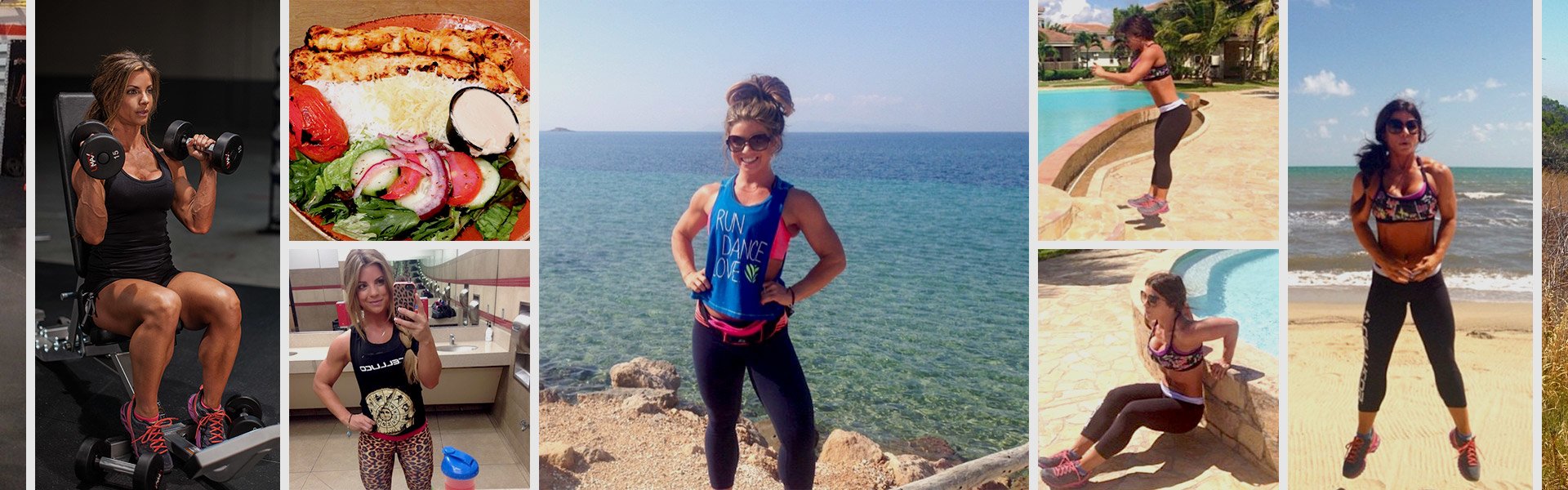
Want to turn heads this summer? Cover model and highly sought fitness coach Jen Jewell has you covered with her game plan for building a show-stopping physique! Rather than focusing on dropping weight—a common trend among the bikini-clad crowd—she suggest you focus on building muscle to achieve your dream physique.
Muscle adds attractive curves to all the right places, giving you the fit look you desire. The increased muscle mass also revs up your metabolic rate, helping to burn any excess fat you may have in the process. The end result? A complete summer makeover!
Get to work on your desired beach body with Jewell's top muscle-building tips and workouts!
1
While you might think the first change you should make has to do with pumping iron in the gym, that's not the case. When it comes to putting on lean mass, nutrition is everything.
"Embrace carbs and protein!" Jen explains. "More often than not, I hear about women skimping on carbs because they think adding too many of them will cause a sudden surge in body fat." It's time to bust that myth. Sure, overdoing anything isn't good, but carbs in moderation are OK—heck, they're even essential.
A big believer in simple, sustainable steps, Jen recommends you focus on including sufficient carbs and protein in your post-workout meal, since it aids recovery and muscle building the most.
A photo posted by Jen Jewell (@fitnessjewell) on Apr 10, 2015 at 9:22pm PDT
Carbs are important for performance, and protein is important for muscle growth. And no, supplementing with shakes won't make you bulky. So, how much should you aim for?
"As far as protein goes, I go for 1-1.5 grams of protein per pound of body weight each day," Jen says. Aim for roughly 25 grams of protein after your workout, and spread the balance across your other meals.
Your overall carbohydrate and dietary fat intake will vary based on your total energy needs, exercise intensity, and exercise duration, but it's safe to aim for 30-50 grams of carbohydrates after your workouts to replenish your energy and jump-start recovery.
What's the best thing to eat before a sweat session? For your pre-workout meal, Jen recommends sticking with foods that are low in fat and contain easily digestible carbs—meaning carbs low in fiber. They'll provide a fast source of energy for the session at hand.
Jen also opts for a high-glycemic carb post-workout to help quickly replenish muscle glycogen (stored energy) levels. Some options include rice, bread, potatoes, and fruit. Have a sweet tooth? Fat-free candy like pixie sticks and gummy bears are another great option! Pair your carbs with a fast-digesting protein like Cellucor COR-Performance Whey for optimal results.
2
"In order to build muscle, you're going to have to challenge your body and stimulate your muscle fibers in a new way," Jen says. "Kick those light weights to the curb, and get ready to really work it!"
Too many women coast through their workout routines and do the same thing over and over again, which leads to a lack of results. "In order to get results, you need to have a clear-cut plan of action each time you hit the gym," says Jen. "This means changing your weight, rep scheme, or exercises in order to keep stimulating the body."
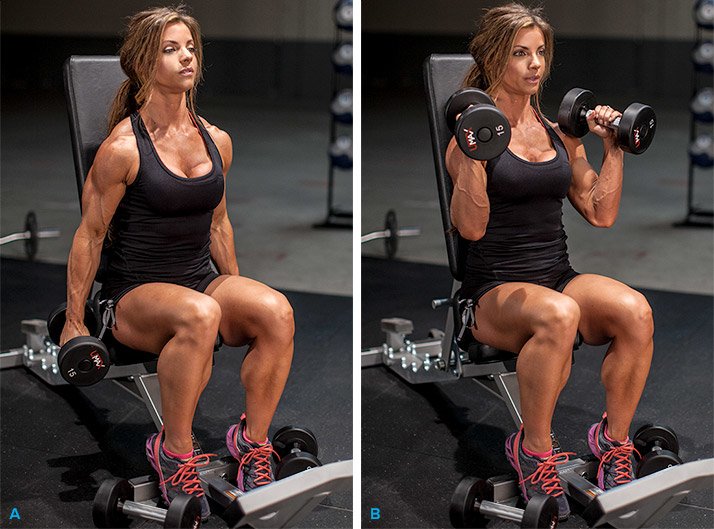
One of Jen's favorite muscle-building techniques is the dropset, a technique where you choose a weight, do reps to failure, and then immediately continue with a lighter weight. You can drop multiple times for an increased effect. "Dropsets are my favorite way to build muscle or help bring up a lagging muscle group or body part," Jen adds.
As Jen explains, dropsets work so well because, in a given set, you are only recruiting a certain percentage of the muscle fibers. But when you do one full set at a higher weight, strip the weight down, and immediately pick up a lighter weight, you recruit untapped fibers. This creates more stimulus and encourages new growth. It also burns a lot of calories!
"Whatever rep range I'm using, I always focus on pushing my reps to failure," Jen emphasizes.
3
Going hard in the gym seven days a week doesn't lead to exponential gains. To build maximum muscle, you must take rest seriously. You actually tear your muscles down while in the gym. In order for them to properly recover and build, they need to have weekly rest time.
"I always take at least one day of full rest from my workouts each week," Jen says. "This means no weights or cardio. Sometimes it'll be an active rest day and I'll do a yoga class, but I definitely make sure to allow my body enough time to recover from lifting."
Recovery can also be aided by what you eat. "Proper supplementation and nutrition are key as well," Jen says. "During or at the end of every workout, I take Cellucor Alpha Amino. The amino acids in this product help not only with recovery, but growth as well."
4
You may have a picturesque physique in mind, but your overall health is always important. "In an effort to achieve optimal health, cardio should be done year round," Jen says. "Including cardio as a key component to your workouts is essential in order to stay at a healthy, lean level while adding muscle."
All too often, Jen says she sees people make the mistake of cutting cardio out completely during a muscle-building cycle. Ultimately, she says, this means putting on too much fat mass and then having to "cut" that off. Over time, this cycle can lead to a repetitive loss of hard-earned muscle and very small net gains.
"Bulking/cutting is a vicious cycle that I see many competitors go through, and it's not the best way to make overall improvements to your physique," Jen states. "If you can maintain a healthy level of body fat the entire year, adding muscle—and being able to hold on to your muscle—is definitely doable."
Jewell recommends that you opt for high-intensity interval training (HIIT) rather than steady-state cardio training. HIIT workouts are based on alternating intervals of all-out work and slower, recovery work. For example, you can sprint on the treadmill or outdoors for 15-20 seconds, walk for 40-45 seconds, and then repeat.
"Adding these more intense bouts of exercise combined with brief stints of recovery can help aid fat loss while helping preserve hard-earned muscle," Jen says. For optimal benefits, she recommends 3-4 sessions of 20 minute each per week.
5
Nearly everyone struggles with lagging motivation occasionally. As the summer weather starts to heat up, it's not abnormal at all to find yourself wanting to forgo the gym to soak in some sun.
Jen has an easy solution for this: "Skip the gym!" Staying out of the gym doesn't mean skipping out on your workout; it just means embracing the outdoors. "I take my workouts outdoors whenever I can," Jen says. "I'm all about having fun with fitness."
"Don't be afraid to take a day off from the weights and head out into the local park, track, or beach to mix up your usual routine," she adds.

While you might not be able to do quite everything outside that you'd do in a brick-and-mortar gym, you can certainly do a lot to keep your muscles stimulated. Bodyweight exercises, sprints, or resistance-band work in the park will all transform your body and keep your muscles stimulated sans weight-room equipment.
As with all fitness endeavors, variation is key with outdoor workouts in order to prevent a progress plateau. "Aside from bodyweight exercises, try doing cardio by running the stairs or sprinting on the track, or grab some friends for a game of volleyball or softball," Jen suggests.
Now that you know Jewell's top tips for muscle-building success, it's time to dive into her workout. With this workout, you'll have two days off per week. Add them into the program wherever they fit best with your schedule—preferably one midweek and another on the weekend.
Note: the dropsets should only be implemented occassionally—not every workout. When you don't do a dropset, perform a regular set.

When it comes to losing body fat and weight and gaining lean muscle mass at the same time, there is no drug better than Winstrol or Stanozolol. One of the best drugs to promote reductions in terms of high-density lipoproteins and an increase in the level of low-density lipoproteins, Winstrol is classified as a controlled substance under the Anabolic Steroids Control Act of 1990 and assigned to Schedule III.
Winstrol has an anabolic-androgenic ratio of 320:30. The active life of oral Winstrol is 8-9 hours, while the active life of injectable Winstrol is 36-48 hours. The chemical name of Winstrol is 17-methyl-2′ H -5(alpha)-androst-2-eno [3,2- c ]pyrazol-17(beta)-ol and Stanozolol has the molecular weight of 344.5392 g/mol at the base. The active ingredient of Winstrol tablets is 2 mg of stanozolol and the inactive ingredients include Dibasic Calcium Phosphate, D&C Red #28, FD&C Red #40, Lactose, Magnesium Stearate, and Starch.
One of the biggest advantages of Winstrol is that it improves the percentage of free testosterone circulating in the body that proves to be extremely beneficial in improving the potency of concurrently used anabolic steroids. Moreover, use of this performance enhancing drug is associated with a dry look to physique when the level of body fat is relatively low. Furthermore, the use of this drug does not lead to liver toxicity as it has the ability to negate the first pass of the compound to pass easily through the liver.


However, abuse or use of low grade Winstrol or use of Winstrol in absence or contravention to medical advice may prove dangerous as it may cause side effects like heart attack, stroke, abnormal functioning of the liver, and prostate enlargement. It may even lead to deepened voice, menstrual cycle changes, depression, hallucination, dizziness, stunted growth, male pattern baldness, reduced sex drive, testicle shrinking, negative effects on an individual’s personality, mood, relationships, and assumptions about social realities or health conditions such as heart attack, edema, prostate enlargement, menstrual problems, liver toxicity, liver damage, testicular atrophy, gynecomastia, acne, oily skin, kidney damage, reduced sperm count, clitoris enlargement, growth of facial hair, and increased aggression.
The side effects of Winstrol may also include addiction, increased aggression, liver toxicity, edema (water retention), heart attack, stroke, enlargement of the prostate, gynecomastia, sexual dysfunction, clitoral hypertrophy, menstrual irregularities, and even death in acute cases or gynecomastia (female-like breasts), oily skin, and obstructive sleep apnea. Winstrol side effects may even include acne, clitoral hypertrophy, infertility, increased risk of heart and liver disease, jaundice, changes in blood coagulation, increased risk of atherosclerosis, elevated liver values, liver toxicity, negative effects on cholesterol levels, acne, prostate enlargement, or aggravation of male pattern baldness. The long term abuse of Winstrol may cause changes in skin texture, acne, menstrual irregularities, increased libido, hair loss, deepening of the voice, body/facial/pubic hair growth, and an enlargement of the clitoris or life-endangering complications like HIV/AIDS when administered via shared needles.
Winstrol must be stored at a controlled room temperature of 20° to 25°C (68° to 77°F) with excursions permitted to 15° to 30°C (59° to 86°F) to ensure optimum benefits and maintain its shelf life.

The biggest mistake you make at the gym might be less about the weights you lift and more about how much downtime you take between sets, according to a new study from the University of Birmingham in the United Kingdom. (Psst...Here's Why Every Woman Should Lift Weights.)
Researchers looked at a small group of men to see how the time in between strength-training sets boosts or impairs muscle growth. The men rested either one minute or five minutes between each set. Then, researchers took biopsies to analyze their muscles. Turns out, those who rested longer built more muscle than the group who skimped on their rest between sets.
Although the study was conducted in a small group of men, the researchers say these results would apply to women as well since women build muscle at the same relative rate. And according to Leigh Breen, Ph.D., lead author on the study, these findings aren't just about bulking up, they apply to building lean muscle mass too.
The men in the study lifted moderate to heavy weights (think 60 percent of your max and higher), but Breen thinks that longer rest periods would be beneficial for anything 30 percent of your maximum capability and above. So if you can manage to do a couple curls with a 50-pound kettlebell, these results would apply when you're lifting anything 15 pounds and above.
Note: This doesn't quite apply to the one pound weights in your barre class, or even HIIT style lifting, which is as much about torching fat as it is about building muscle. Waiting so long between sets sort of defeats the purpose if that's your goal.
The bottom line? If you want to build strength and boost muscle tone, extend your rest periods and make sure your weights hit or exceed that 30 percent mark. If waiting a full five minutes between every set seems a little unfathomable (who has that kind of time?!) the researchers recommend starting out with 2-3 minute break periods when you're in the weight room.
It seems like a lifetime ago that a bodybuilder's devotion was measured only by training hours per day—and days per week—spent in the gym.
Now we know that our testosterone levels are shot after about an hour of exercise in the weight room. Doing much weight training beyond that hurts us more than it helps us. We also know that 3-4 days per week are all that's needed to get the body of your dreams.
So, with all this new knowledge about duration and frequency of our workouts, we should all be growing like weeds with just those 3-4, one-hour training sessions per week, right?
This, of course, is not the case! Today, there are just as many frustrated lifters as there were 20 years ago, when gym rats spent 20 hours per week or more in their local box.
Most bodybuilders hit plateaus, no matter how often they lift, because they don't want to change their routine—comfort quickly leads to fewer gains.
Using an old pre-season football strategy of two-a-day workouts—literally lifting twice in one day—is a great way to mix up your routine, giving you better muscle and strength gains while helping to slash body fat.
And no, you don't have to be in the NFL to do two-a-days!
This approach is great for anybody looking to make awesome gains on a tight schedule because, as it turns out, two 30-minute workouts are actually more productive than one 60-minute workout.
One of the greatest benefits of doing two-a-days lies in the obvious—you're working out twice in one day and, hopefully, you're also eating two post-workout meals!
By working out twice, you get your protein synthesis and other anabolic systems racing. If you take full advantage of this by having two post-workout meals, you can start to see your gains skyrocket.
You will also find yourself able to train with more intensity.
When faced with a full hour's worth of exercise, most of us subconsciously conserve our energy early on, so we don't find ourselves dragging through the latter portion of the workout. By splitting the total day's training between two sessions, intensity levels start and finish higher, which is key to new strength and muscle gains!
And since you're fully ramped up for each workout, you'll burn more total calories than if the whole workout had been done at the same time.
The greater calorie deficit will offset the extra food being eaten, and the overall affect is more muscle with more fat burn!
Some basic rules apply to all two-a-day programs.
While you don't have to be exact with the timing, you need to allow at least six hours between the two workouts. If your workouts are much closer than this, you'll be too tired for optimal performance during round two.
Because of this, most people find it easiest to hit the gym in the morning before work and then catch another session after work. Going on your lunch break and then again in the evening also works well, as long as you've waited at least six hours.
You also have to make sure you limit your workouts to no more than 40 minutes in length, excluding the warm-up.
And yes, it is very important for you to perform a proper warm-up and cool-down to speed up recovery, since you'll be back in the gym before the day is over!
The light, rhythmic exercise you get with a proper cool-down, such as 5-10 minutes of an easy aerobic activity like running, will help the heart to return the pooled blood trapped in the pumped-up muscles, speed up the removal of lactic acid and other metabolic byproducts, and allow the muscles to lengthen again after the chronic contractions of a good lifting session.
You'll quickly get tired of two-a-days if you're constantly fatigued, so a quick and efficient recovery is the key to this program's success.
Simply doing two random workouts in one day will quickly lead to overtraining and burnout. There's a proper way to structure your program so that you meet the increased energy demands and take full advantage of this unique fat-burning and muscle-building opportunity.
Due to the intensity of training, these programs are best saved for busting through plateaus, or for those times when you're extremely motivated to work out and the idea of going to the gym that much sounds appealing.
To avoid overtraining, two-a-days should be cycled—two weeks on, one week off—or you'll burn out and, alas, plateau—the very thing you'd hoped to overcome.
Treat the two-a-day regime with respect, and it will respect you back!
While there are plenty of ways to design your program, one of the most effective is lifting heavy in the first workout, then lighter in the second.
This lets you train your high-threshold muscle fibers—the ones with the most strength and growth potential—with a short, tough workout in the morning, while fitting in an evening workout that's easier but longer.
Here's an example:
Day 1: Chest/Back
Day 2: Legs
Day 3: Rest
Day 4: Arms
Day 5: Rest
1
6 sets of 2-5 reps
2
6 sets of 2-5 reps
3
2 sets of 10-15 reps
4
2 sets of 10-15 reps
5
6 sets of 2-5 reps
6
2 sets of 10-15 reps
Note: A five day split will still fit into a two-week time frame if the fifth day is a rest day. That way the last workout of the third rotation will fall on day fourteen, or exactly two weeks from day one.
A huge part of recovery is proper nutrition and supplementation.
If your goals are strength and size, then your nutritional program is pretty easy: eat! Don't skip your post-workout meals, add calories whenever you can, and fit in an extra protein shake on your training days.
You will need the extra nutrients to maximize your strength and muscle gains.
Ideally, you should increase your protein intake to 1.5-2 grams per pound of body weight. A macronutrient ratio of 60 percent carbs, 25 percent protein, and 15 percent fat works very well for most people for strength and muscle gains.
If your goal is weight loss, then you'll want to be careful not to create too large of a calorie deficit that will send your body into a starvation state.
The workouts will create a calorie deficit by themselves if you simply maintain your current food intake. For most people, this is exactly what I would recommend!
For people who want to truly maximize fat loss, creating a slightly larger caloric deficit will help, but you'll be risking hard-earned muscle by doing it.
No matter what your training goals, make sure that your main supplement bases are covered. You should be taking a daily multivitamin plus at least 3-6 grams of vitamin C daily, an antioxidant formula, a zinc and magnesium combo, a good whey protein, and flax seed or fish oils for the essential fatty acids you'll need for recovery.
Unless you have these basic nutrients covered, then all the "specialty" supplements in the world will not help you maximize your gains.
Two-a-days are certainly not for the casual fitness enthusiast, but if you challenge yourself and see at least one full cycle through, you'll bust through plateaus and see amazing gains in a really short time!

Most of us have heard of the many environmental challenges facing our world – global warming, deforestation, increased pollution. And while it is easy to think that the issue is too big for us to make a difference, that is far from the reality.
Every little bit helps and it all starts with your daily choices, even when it comes to the simple things…like bags. And that’s why reusable bags are a great place to start.
Replacing snack, food, sandwich and shopping bags with reusable alternatives is a smart decision that will ensure you are doing something, even if only a small thing, that will contribute to a better world.
As Jeff Bridges says in the video below…
“Plastic is a substance the earth cannot digest. And every bit of plastic that has ever been created still exists….By refusing disposable plastics you can improve the health of the environment and ocean around us, including human health and animal health”.
Pretty compelling reasons to ditch the plastic in favor of environmentally friendly reusable bags and packaging. If you need any more convincing, read this article.
There are a variety of reusable bags available in different sizes and for a range of uses. Not only are they available in diverse sizes, there are loads of fantastic designs with lots of lively colors and patterns to choose from. This makes them both nice to look at while being very practical. They are particularly appealing to kids.
With their great durability, you will get a lot of use out of them for a long time to come. Here’s a few different options:
Reusable Snack Bags – these are a great choice for snacks and small portions of food and replace single use ziploc style bags. But, they are also great for small items like mobile phones, small cameras, toiletries, makeup, pens/pencils/crayons, travel items etc. They can be used in school bags, hand bags or when travelling.
Reusable Sandwich Bags – larger than the snack bags and usually square shaped. They are ideal for sandwiches, bread rolls and larger items. Like the snack bags, they can be used in a range of situations.
Reusable Grocery Bags – available in a huge number of colours and sizes, these bags are durable enough to handle heavy items as most have reinforced handles and bottom. The larger styles also have a good capacity that makes it easy to carry large quantities of groceries.
Reusable Produce Bags – these are for to use both when shopping for and storing your produce. They are a lighter, mesh style bag that allows the produce to breath while allowing you to see what is in each bag. They are also great for storing small wet items and bathtub toys.
The snack and sandwich bags are usually made of 100% cotton on the outside with the inside lined to make them moisture resistant. This makes them very simple to clean.

You can clean them in the top rack of the dishwasher, in the washing machine or simply wipe them over with a moist sponge. Depending on how quickly you need to reuse your bags, they can be dried either in your dryer or air-dried.
Grocery bags can be made from a variety of materials including non woven fabric, canvas, cloth, paper and recycled materials. There are also some options made from plastic, and while these aren’t ideal, reusable options of any kind are better than single use plastic bags..
Apart from the paper option, these can be machine washed and then dried. Over time they may need to be replaced due to wear and tear, but they can last for years.
Lastly, the produce bags are primarily made from polyester. While this is a synthetic material, it is still preferable to use them than the single use plastic alternatives.
There are lots of great reasons to start using…and reusing…reusable bags. A few have already been mentioned above, but here’s some more.
Once you start with reusable bags, there is no need to continually purchase snack, sandwich or other bags to keep in the cupboard. The bags you buy will last a long time and while they will need to be replaced at some stage, it will be through wear and tear, not because they are a single use disposable.
Buying less single use bags means you will save money and it will add up to quite a bit over time. It is easy for a family of four to waste around $100 a year just on lunch and snack bags which are thrown away. Using reusable snack bags will save that money so you can spend it on something else more important to your family.
As mentioned above (see video), we all can use a ridiculous amount of plastic in a year. Typically, a person can use about 500 sandwich and snack bags a year.
If you think about it, this figure is not far fetched as we often use these bags not only for food but lots of other bits and pieces too. For a family of four those statistics increase rapidly.
You can certainly feel good about protecting the environment by decreasing your household waste.

Fun, bright prints make for more fun all round – reusable bags certainly aren’t boring. You can choose from hundreds of colors, patterns and designs in a style you love.
In particular, this is great for your kids, and makes food a bit more fun. Especially those that always seem to “forget” to eat their lunch!
All reusable bags are super easy to clean.
With snack and sandwich bags, there is no need to worry about jam, honey or crumbs getting trapped in the corners. Just open up and either clean with a cloth or just put it in the washing machine or dishwasher.
For shopping and produce bags, hand wash or throw them in the machine.

There are really so many things these bags can be used for – think beyond food! Anytime you would normally grab a plastic bag for something, think about a reusable alternative.
Of course, they are great for lunches, picnics and snacks, but some other amazing uses include holding coupons, frequent shopper cards, iPods/iPhones, jewelry, note pads, pens, small toys, smart phone, tea bags, and wet wipes.
They are also really popular with athletes, gym enthusiasts and weekend sports people.
So now you know why reusable bags are better for you AND the world. If you haven’t already, start to replace single use plastic bags with reusable options wherever you can.
Start to make a conscious effort and it will quickly become a habit. I started with making sure I always had shopping bags in my car and now I don’t even think about it. They are always there when I need them.
The more you use reusable bags, feel confident you are doing something to help yourself while benefiting the environment.
Product Images Sourced From Amazon.com
>> CLICK TO DOWNLOAD THIS POST AS A PDF TO SAVE FOR LATER <<

Train with thick bars to improve grip and forearm strength. If nothing else, you’ll be more powerful in everyday tasks, and have a stronger deadlift. Naturally, thick or “fat” bars should be used in addition to regular diameter dumbbells for best results—variety is essential in the weight room. It’s never a smart idea to be too restricted or do the same thing every day if you want to get results. And thick bars are an essential addition to your program because they will make you stronger and help avoid injury. They’re also fun and can help prevent boredom.
Simple Reasons to Do Thick Bar Training:
1) You’ll improve grip by increasing strength and neural drive in the hand and forearm muscles, allowing you to deadlift more.
2) You’ll improve forearm strength and your joints will feel better. You may even get rid of tendinitis and pain in the elbow.
3) You’ll have forearm and hand strength that will transfer to combative sports that include grabbing or grappling abilities. You’ll likely improve at catching a basketball or football as well.
4) Ladies, if you struggle with catching the basketball, want to get better at snagging the football, or prevent tendinitis that hampers your tennis or golf game, this is particularly important for you! You won’t get big, unsightly forearms, but you will have more transferable hand strength.
Thick bars have been around for a while, and there is research to support their use, but not a lot. It seems they haven’t caught on in the U.S. as much as you’d expect considering the injury prevention and strength benefits. Cost may be a factor because mainstream gyms and financially strapped sports programs opt for cheaper, better known equipment. Let’s check out why thick bars are a good investment and how they can help you take it to the next level.
Thick Bar Training Increases Neural Drive
Training with bars that are thicker than the standard dumbbells or Olympic barbell will increase neuromuscular strength in the forearm and hand. The key is to train pulling and curling motions with thick bars to get this benefit because those lifts are when the hand and forearm are being maximally challenged to hold the bar against gravity. This is the best way to maximize neural drive.
Research Supports Thick Bar Use
A study from 1992 in the International Journal of Industrial Ergonomics that examined how three different bar diameters affected neuromuscular strength supports thick bar training. Researchers tested how muscular strength and neural drive vary based on the size of an industrial handle as applied to three different resistances. They compared a handle matched to the inside grip diameter, a handle one cm smaller than the inside grip, and a handle one cm larger than the inside grip, and tested electromyographic (EMG ) activity.
They found that the smallest handle elicited the greatest maximal voluntary contraction and the lowest neuromuscular activation as assessed by EMG.
The largest diameter handle triggered the greatest neuromuscular response, and the smallest maximal voluntary contraction than the other two sizes. The study population included individuals who had no resistance training experience but did regularly grip handles in their jobs and exert force.
This study supports the use of thicker bars for greater neuromuscular activation of the forearms and highlights what we will see in additional research—that maximal strength may not be as great initially with thicker bars.
The key is that with training, you’ll be able to exert greater strength when using bars with wider diameter, and will benefit from improved neural drive and improved forearm strength when you go back to lifting with a standard bar.
What Exactly Happens When Pressing With Thick Bars?
A 2008 study published in the Journal of Strength and Conditioning Research may appear to give contradictory results to the 1992 research, but at closer look it just provides guidance into when and how to program thick bar training. This study tested two different bar diameters (standard size of 2.8 cm vs. thick bar or 5.1 cm) on neuromuscular activation and strength.

Researchers used college-age men with previous resistance training experience. They measured EMG for the pectoralis major and the forearm flexors during a unilateral isometric bench press at an intensity of 80 percent of the 1RM. They tested isometric activity at two joint angles in the bench press: the first angle was with the elbow joint at a 45 degree angle; the second position was with a 90 degree angle at the elbow joint and the shoulder joint parallel to the elbow joint. Participants performed three repetitions for each exercise and held the contraction for five seconds.
There was no difference in maximal weight lifted between the two bars, likely because the bench press is a pushing motion and the prime mover was the pectoralis and not the forearm muscles. Also, an isometric contraction rather than a dynamic one was used, which will naturally affect force. If the lift had been a pulling exercise such as the deadlift, the maximal contraction would likely have varied based on the bar diameter as we’ll see in the 2007 study reviewed below.
Take note that there was a difference in EMG activity between the bars, and you might be surprised to find that the thinner, standard Olympic bar elicited the greatest muscle activity in the forearm muscles, indicating higher neuromuscular drive from the this bar. This was the case for the forearm muscles for both joint angles.
For the pec major at the 45 degree elbow angle there was greater EMG activity with the thin bar, but there was no difference for the pec at with the 90 degree elbow angle based on bar diameter.
The essential point to make here is that the bench press is not an ideal exercise to use to test the overall utility of thick bars. With a bench press the athlete is at a mechanically advantageous position, and grip strength is not a limiting factor. To effectively improve grip and forearm strength you, want to use exercises that will challenge your weakest link at its weakest position. The forearm and hand are not in a weak position when pressing, rather they are advantaged.
In comparison, in a curling exercise such as the bicep curl, you might think that the hand and forearm are at a mechanical advantage when grasping a thick bar, but if you focus on the eccentric portion of the curl with a very slow negative and a heavy weight, you’ll find that thick bar curling is excellent for improving grip and forearm strength.
Eccentric-Enhanced Training with Fat Bar Makes You Stronger
Steve Channell wrote a review of thick bar training in 1990 that was published in the Strength and Conditioning Journal that supports this. He highlights that the muscles of the hand and forearms are in a constant state of contraction with a thick bar, particularly during the eccentric contraction. With a smaller bar during the eccentric contraction, the hand and forearm muscles may “rest,” especially if less than ideal technique is used as in the case of young athletes with limited experience.
The extra work done during the negative phase of the repetition with a thick bar by the flexors and extensors of the forearm is an ideal way to develop forearm strength. During the down phase of the bicep curl, the forearm muscles must work against the weight in order to maintain hold of it, while they are simultaneously counteracting gravity.
Channell writes, “the actual grip on the thick bar becomes a major component of the movement , whereas with a regular bar, an athlete may often just hang on to or wrap his or her hands around the bar; seldom is the athlete actually gripping it.” He notes that the exercises that train the grip and forearms the most with the thick bar are upright rows, standing curls, and preacher curls. He likes thick bar training to mix things up, and prevent boredom, while providing a new kind of stimulus to the muscles.
Maximize Training With Thick Bar: Six Lifts Explained
A study from 2007 in the Journal of Strength and Conditioning Research provides insight into programming different lifts, neural drive, and the thick bar. Participants were college-age males with weight lifting experience.
Researchers tested three bar diameters on maximal strength in six exercises. They also tested grip muscular endurance and correlated these results with the lifts in order to identify if hand and forearm grip were a factor in allowing participants to lift bigger loads. Unfortunately, they didn’t test EMG activity in this study.
The bars used were a standard Olympic bar, a two-inch (5.08 cm) bar, and a three-inch (7.62 cm) bar. The exercises tested were the deadlift, upright row, bent-over row, bench press, shoulder press, and arm curl. Note that the mechanics of the lifts vary in that three are pulling (deadlift, upright row, bent-over row), two are pushing (bench and shoulder press), and one is curling (arm curl).
Only three exercises were tested per session (stressing different muscle groups and different mechanics). The grip endurance test was done on a different day and involved the subject standing erect in the lock-out position of the deadlift using a pronated grip. They held the loaded bar with 75 percent of the 1RM load for the deadlift for as long as possible.
For all exercises tested, participants were able to lift the greatest amount with the Olympic bar, followed by the two-inch bar, and then the three-inch bar. Differences between the loads lifted were not statistically significant for all lifts. Rather, for the deadlift and bent-over row, significant reductions in load were seen when using the thicker bars versus the standard Olympic bar.
For the deadlift with the two-inch bar participants lifted on average 28.3 percent less, and with the three-inch bar they lifted 55 percent less. In the bent-over row, with the two-inch bar they lifted 8.9 percent less weight, and with the three-inch bar they lifted 37.3 percent less.
Clearly, although participants were likely maximally activating their hand and forearm muscles in these lifts, they did not get nearly as much stimulus to the leg and lower back muscles as they would with a standard bar. But, remember that participants had no experience training with thicker bars, and naturally, no one is going to recommend you train pulling exercises like the deadlift with a thick bar forever.
For the upright row and arm curl, significant reductions in maximal weight lifted were observed only with the three-inch bar (26.1 percent less weight for the upright row and 17.6 percent less for the arm curl compared to the Olympic bar). The two-inch bar and Olympic bar allowed participants to lift equal weight. No significant differences were seen in maximal weight lifted for the different bars in the bench and shoulder presses.
Greater Grip Strength Equals Greater Maximal Lifts
Interestingly, time to exhaustion for the grip endurance tests were 40 seconds for the Olympic bar, 49 seconds for the two-inch bar, and 46 seconds for the three-inch bar. Difference in time to exhaustion was statistically significant for the variance between the Olympic bar and the two-inch bar. It is suggested that this is due to “a more favorable interaction of grip span and loading.”
Take note that individuals with greater grip strength had less decrease in maximal lifts with thicker bars, indicating that greater grip strength is a factor in optimal performance for all bar diameters.
DOMS In the Forearms Are An Indicator of Greater Stimulus
It’s noteworthy that participants reported greater delayed onset muscle soreness in the forearm following testing with the three-inch bar, indicating that the thicker bar provides greater stimulus to the forearm muscles. Greater stimulus equals more neuromuscular stress and ultimately greater strength and performance gains. Too bad they didn’t test EMG!
Researchers note that there was no significant differences in 1RM lifts between the bars for the pushing exercises, which was not surprising since grip strength is not a primary factor for peak performance in these exercises. Surprisingly, participants reported feeling greater comfort when performing pushing exercises with the thick bars, despite a hypothesis that they’d describe higher levels of discomfort with thick bars because a greater surface area of the hand is engaged with the bar and greater pressure may be placed against the thumb.
Takeaway that thicker bars develop grip strength, and that greater grip strength will likely lead to greater maximal lifts in pulling exercises such as the deadlift and bent-over row because grip will not be as much of a limiting factor.
Researchers caution training with thicker bars all the time because doing so will likely require significantly lighter loads to be lifted, particularly in the pulling exercises.
World-Class Gripper Tells Us How To Take Your Grip To the Next Level
Richard Sorin, winner of many world-class grip contests, was interviewed on grip training and strength in the Strength and Conditioning Journal. He said that variety is the key, and suggests lifting sacks of sand, in which the handhold ability would always be shifting. He also likes oversized soft-handle dumbbells because they demand the hand to be open more. Plus, grasping them makes you hold onto a semi-dynamic fixture just like if you are grappling in wrestling or grabbing an opponent in football. The load is shifting, requiring more stabilization in the hand and forearms.
Sorin incorporates grip training into his regular arm workouts and likes using the thick bars. He notes that he had his best grip performances after training deadlifts and shrugs with a two-inch bar!
He says that his loads in the deadlift and shrugs were lighter at first, but that “after a while my number in the deadlifts and shrugs started to approach what they were on a traditional bar.” He suggests that having a stronger grip supported a heavier deadlift as well.
References:
Fioranelli, D., Lee, M. The Influence of Bar Diameter on Neuromuscular Strength and Activation: Inferences from an Isometric Unilateral Bench Press. Journal of Strength and Conditioning Research. 2008. 22(3), 661-666.
Ratamess, N., Faigenbaum, A., et al. Acute Muscular Strength assessment Using Free Weight Bars of Different Thickness. Journal of Strength and Conditioning Research. 2007. 21(1), 240-246.
Grant, K., Habes, D., et al. An Analysis of Handle Designs for Reducing Manual Effort: The Influence of Grip Diameter. International Journal of Industrial Ergonomics. 1992. 10, 1999-1206.
Sorin, Bert. Grip Training for the Athlete. Strength and Conditioning Journal. October 2001. 23(5), 45-46.
Channell, Steve. The Fat Bar. Strength and Conditioning Journal. 1990. 12(4), 26-27.
Building lean muscles is often perceived as an easy task that would be gained by simply eating anything to everything that comes your way. Well, this is one of the biggest mistakes that most people make when trying to achieve their goals.

Building lean muscles all depends on what you choose to eat. There are certain foods that are highly recommended and yet there are those that should totally be avoided. For example, junky foods should not be in your list of favorite foods if you are planning to build lean muscles. In addition to eating a lot of calories, serious training should be part of your regular routine.
When building lean muscles, the main target that should be on your mind in terms of your diet plan is taking foods with minimal fat content. Doing this is quite beneficial in a variety of ways including the fact that you would be saving your heart from diseases such as heart attacks and strokes. Also, your metabolism would be improved and your joints strengthened. Below are top foods to take when planning to build lean muscles.
Beef
Beef is one of the most recommended foods to build lean muscle since they have a lot of proteins to offer. Additionally, they contain cholesterol, vitamin B, iron and zinc. If you can get beef from cattle that are grass fed then this would work best for you. This is because grass fed cattle have got more conjugated linoleic acid than other forms of cattle. Thus, building lean muscle would be easy since fat shedding would be boosted by eating beef.
Salmon
The protein obtained from salmon is similar to that which is obtained from pork, beef and chicken. The best thing about salmon is that they have low fat content (bad fats). Hence by eating salmon the risk of gaining high cholesterol levels is low. Omega 3 fats are also present in salmon which implies that you would be gaining benefits such as reducing heart diseases, glowing skin and healthy joints.
Beets
Beets are famous for betaine nutrient. This nutrient is the best remedy for joint problems and liver ailments. Studies have also proven that betaine helps to enhance muscle power and strength.
Brown Rice
To ensure that you train for hours without getting tired, brown rice is recommended for you. This rice takes time to be digested which ensures that your body retains energy during your workout sessions. Furthermore, brown rice boosts GH (Growth Hormone) levels and this encourages the lean muscle growth that you yearn for.
Eggs
Eggs are an excellent choice for proteins. Medics argue that eggs help in boosting lean muscle growth and also enhancing strength gains. This is attributed to the yolks since cholesterol is found here.
At times people are worried about their cholesterol levels shooting up after eating a lot of yolks. Well, studies prove that cholesterol obtained from eggs help in reducing LDL i.e. bad cholesterol linked with atherosclerosis.
Cantaloupe
Building lean muscle also requires that you take in some healthy carbs. Cantaloupe is a fruit considered to be the best in carbs that digest easily.
As I post about my NPC Bikini progress, people often ask me what supplements I am using and why. (Note: I am doing a drug tested competition.)
I currently use quite a few products from powders to pills so I want to give you a peek into just my favorite ones (plus which brands I prefer) and why they are necessary for my training. **Disclosure: If you click through and purchase any of the items I recommend, I could be compensated a small amount. As usual, I keep it real! My full disclosure policy can be read here.**
Before we dive in, I want to stress a few things…
What I use to supplement my fitness is based on my goals and my nutritional needs. My personal trainer who is also certified in nutrition has hand picked these for me. Although my supplements have great benefits, they might not be a good fit for you or your goals. Always ask your doctor, nutritionist and personal trainer before you start using supplements that you see other people promoting.
Supplements are called “supplements” for a reason. You should not be eating garbage all day and then expect a miracle pill/powder or anything to make you look great. That’s unhealthy and it makes me cringe. The goal here is to get your nutrition on point and then supplement to enhance your results.
End rant.
Now the fun part!

Rebuilt Mass
The Rebuilt Mass supplement is designed for quite a few things from preventing muscle breakdown while adding intense cardio, boosting muscle recovery to regulating water levels. I use the Strawberry flavor because it’s delicious and I can mix my BCAAs (see below) in with it versus having to drink them separate. So. Much. Water. I love that you can mix it into water, juice, milk or bake with it. I have even put it in my oatmeal!
100% Whey Protein Powder
Whey isolate is designed to dissolve easily in water and digest quickly to feed muscles fast. I am using Dymatize Iso Whey or I also like Isopure (dying to try the Toasted Coconut flavor!) because both are a really clean protein, great flavors, and they are readily absorbed by the body.
100% Casein Protein Powder
Unlike whey, 100% Casein protein powder is digested over a period of about eight hours. I use this before bed so that my muscles are fed overnight to promote recovery and build lean mass while preventing muscle breakdown from being in a fasted state. My favorite way to eat it is as pudding! Just add enough water to get the pudding consistency you want and chow down! I am currently using Body Tech (Vitamin Shoppe brand) but Optimum Nutrition could be another good option.
CLA
Linoleic Acid belongs to the omega family of fatty acids, which perform vital functions in the body and are necessary for optimal health. The conjugated form is a combo of different forms of Linoleic Acids that occur in nature. CLA can help to enhance muscle growth and reduce body fat. My diet is LOADED with healthy fats right now to assist my body in using fat for fuel especially when my nutrition goes through calorie/carb deficits.
ZMA
This is my favorite supplement of all time. ZMA is a zinc, magnesium and Vitamin B6 supplement which helps to enhance REM sleep. I take this right before bed on an empty stomach and sleep soooooo hard. We know that sleep is essential for muscle repair and growth, so this is key. In addition, zinc has been found to be critical for muscle recovery and growth. Magnesium is also an essential mineral important for healthy function of the cardiovascular system, and metabolism. Vitamin B6 aids in the utilization of these minerals in the body. Stacking these minerals together can help to enhance muscle size, muscle strength and fat loss. Winning!
Beta Alanine
Beta-A is found in most pre-workouts like C4 and Neurocore. It is a non-essential amino acid that helps delay muscle fatigue by regulating acid buildup during intense workouts. I do not use a pre-workout, but I take one pill pre and post workout to help with acid buildup. I notice a big difference in muscle soreness from using this. I am rarely sore even with triple workout days!
BCAAs
Branched Chain Amino Acids are essential nutrients naturally found in food. BCAAs can help to increase muscle retention and maximize fat loss by increasing the rate of protein synthesis and increase the body’s capacity for protein synthesis. So instead of just ingesting more protein, BCAAs actually enhance the protein digestion. They can also help to reduce the amount of Serotonin produced during exercise which helps to decrease the perception of fatigue. Along with using Beta-Alanine, I 100% attribute the lack of soreness to these supplements.
Acetyl L-Carnitine
Acetyl-L Carnitine is an amino acid that helps the body metabolize fats to produce energy. It is important for heart, and brain function as well as muscle movement.
Again, let me stress that just because I am using these supplements means that YOU should!
